A sofa fabric Martindale rating is the number of abrasion cycles a fabric survived in the Martindale abrasion test before it showed a defined level of wear. As a working rule, fabrics for home sofas are usually specified somewhere between 15,000 and 30,000 cycles and fabrics for hotels, offices and other public seating from 30,000 upwards, but the count alone does not tell you whether a velvet, chenille, bouclé or nubuck-look fabric will suit your market. Pilling and colour fastness to light matter as much, and all three should be stated in your enquiry.
This guide is written by ellda mobilya, a furniture manufacturer in Kayseri, Türkiye, producing sofa sets, corner sofas, bed base sets and mattresses since 2010. Our corner sofa construction guide covers the whole sofa, from frame to cover. This one stays with the fabric: what the four textures popular on export sofas do in use, how to read their test results, and what to write in a wholesale enquiry.
What does a sofa fabric Martindale rating measure?
The Martindale abrasion test rubs a round fabric sample against a standard abrasive cloth. The sample is pressed down with a set load and moves in a looping figure-of-eight path. The machine counts cycles. The test stops when the sample reaches its end point, such as broken threads or a visible hole. The result is reported as a number of cycles, often called rubs.
A higher count means better resistance to wear from sitting, sliding and clothing. It does not measure softness, stain resistance, seam strength or how the pile looks after a year. A velvet can pass a high count and still show crushed pile where people sit most.
The Martindale test is the usual reference in European and UK fabric specifications. In North America many fabric suppliers quote the Wyzenbeek test instead, which counts "double rubs" on a different machine. The two numbers are not interchangeable, so ask which method a figure comes from before you compare two fabrics.
Residential or contract: what sofa fabric Martindale rating do you need?
No single law sets a minimum rub count for sofas sold to consumers. The bands below are common industry practice, taken from the published guidance of a European upholstery textile maker (Kvadrat). Other suppliers and older British classifications draw the lines slightly differently, so treat them as a starting point, not a pass mark.
| Use | Typical Martindale band | Examples |
|---|---|---|
| Light duty | 10,000 to 15,000 cycles | Scatter cushions, occasional chairs |
| Residential (medium duty) | 15,000 to 30,000 cycles | Living room sofas, armchairs, corner sofas |
| Contract (heavy duty) | 30,000 to 50,000 cycles and above | Hotel lobbies, restaurants, waiting areas |
Last verified: 10 November 2026.
For a retailer selling family sofas, a fabric in the residential band is normally enough. A contract-grade cloth raises the price without a visible benefit to the end customer. For a project order, such as a hotel or serviced apartments, the specifier often sets the figure in the tender. Pass it to the manufacturer word for word.
Pilling and colour fastness: the two tests buyers forget
Pilling is the small balls of fibre that form on a fabric surface with rubbing. The pilling test rubs the fabric and then compares it with photographic standards on a scale of 1 to 5, where 5 means no pilling and 1 means severe pilling. A fabric can have a high Martindale count and still pill badly, which is the most common reason end customers complain that a new sofa "looks old".
Colour fastness to light measures how much a fabric fades under light. The lightfastness (blue wool) test exposes the fabric next to a set of blue wool references. It grades the result from 1 to 8, where 8 is the most resistant. Fading matters in sunny markets and in shops with large windows, where a sofa may sit on display for months.
For a benchmark, look at the EU Ecolabel criteria for furniture, a voluntary label. They ask textile upholstery covers for a pilling result above grade 3 and colour fastness to light of at least level 5. Level 4 is allowed for some light-coloured wool and linen-rich fabrics (Decision (EU) 2016/1332, Appendix II, Table 8). The same table asks for colour fastness to rubbing of level 4 dry and level 2-3 wet. The criteria have been extended until 31 December 2029 (Decision (EU) 2026/66; see also the German EU Ecolabel body). As of November 2026, these are label criteria, not legal minimums, but they are a useful line to ask suppliers against.
Velvet, chenille, bouclé and nubuck: how each behaves
The four fabric types buyers most often ask about on export sofas are surface or yarn types, not fibres. Each can be made from different fibre blends, so two fabrics with the same name can test very differently. The table shows what the type tells you and what only the test data can.
| Fabric type | What it is | Watch for in use | Test to look at first |
|---|---|---|---|
| Velvet | Short, dense cut pile | Pile crush and shading where people sit; colour looks lighter or darker by direction | Martindale count and pile appearance |
| Chenille | Woven from a tufted yarn with a soft, slightly glossy pile | Loose tufts on low-grade yarn; shading similar to velvet but softer | Pilling and Martindale count |
| Bouclé | Looped, textured yarn with a matt surface | Loops can snag on pet claws, rings and Velcro; pilling on some blends | Pilling and snag behaviour |
| Nubuck-look | A fine textile brushed to imitate nubuck leather, not leather | "Writing" marks when the pile is brushed; stains on light colours | Martindale count and colour fastness to rubbing |
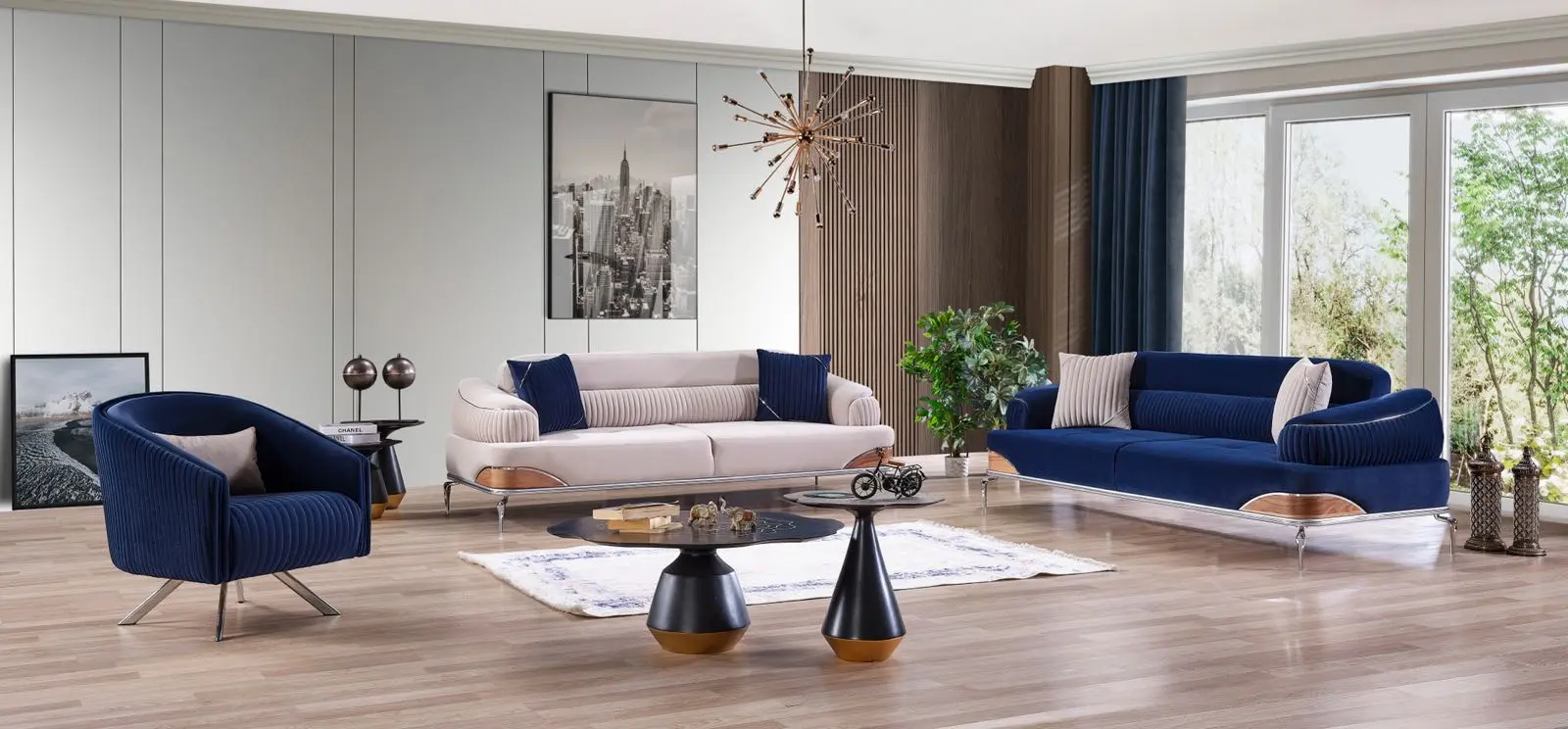
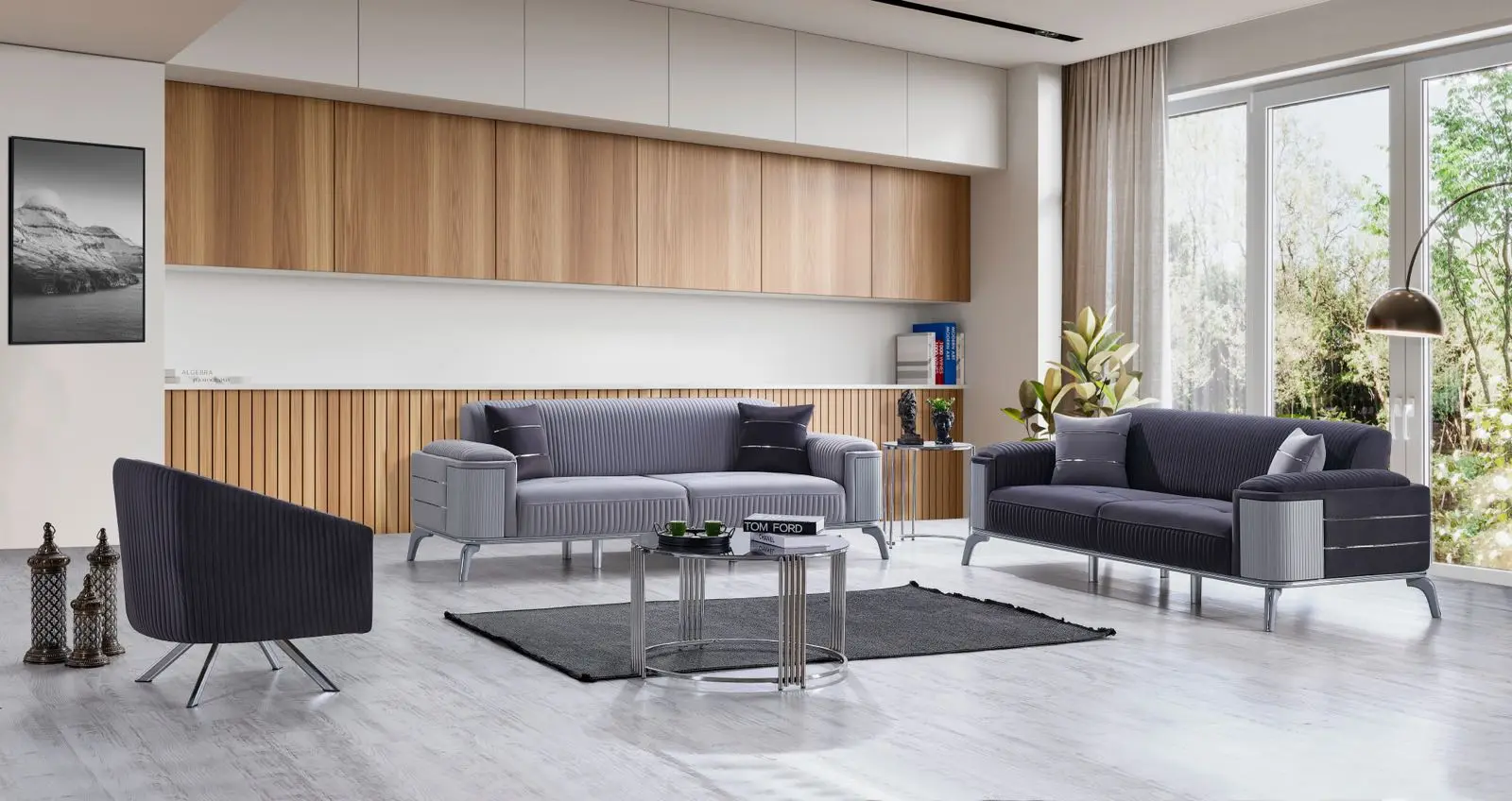
Velvet suits deep, saturated colours and formal settings. In our catalogue photos, models such as Pegasus and Kayra are shown in velvet, including ribbed velvet. Ask for the pile direction to be agreed for every panel, so that cushions do not look like two different shades.
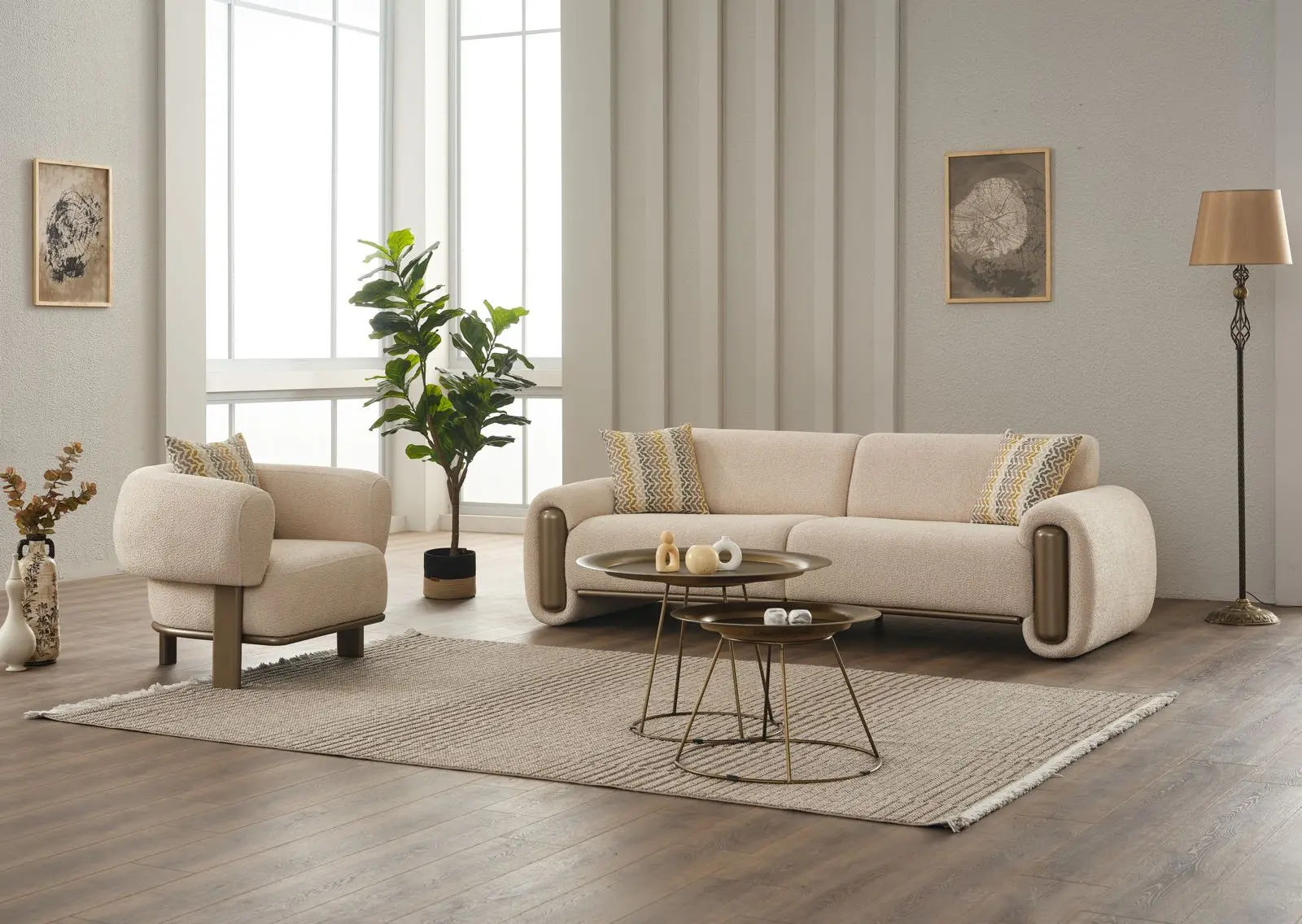
Bouclé works best in calm, light colours and rounded designs. Ekol and Monza are photographed in bouclé. If your customers often have pets, ask for a tighter bouclé and say so in the enquiry.
Chenille is a common everyday choice because it feels soft and comes in plain and patterned versions. Its quality depends heavily on the yarn, so the pilling grade tells you more than the name.
Nubuck-look fabrics are easy to confuse with leather. Make sure the product description and the care label say "textile", not "nubuck leather", especially in markets with labelling rules on fibre content.
What to state about sofa fabric in your enquiry
A clear fabric brief saves a round of quotes. Send these points with your model list:
- End use: residential, or contract (hotel, office, restaurant). For contract, give the rub count the specifier requires.
- Fabric type and colour: velvet, chenille, bouclé or nubuck-look, with colour names or a reference swatch.
- Test data you need: Martindale cycles, pilling grade, colour fastness to light and to rubbing. Ask for the fabric's test data in the quote, with the test method and the laboratory named.
- Market rules: flammability and labelling rules depend on the destination. See our guides to UK furniture fire safety and 16 CFR 1640 for the US.
- Use conditions: pets, strong sun, display in shop windows, or covers that must be removable.
- Colour approval: whether you want a swatch or an approved sample before production.
- Quantities per fabric and colour: fabric choice affects price and minimums, as explained in our guide to wholesale furniture pricing.
Compare fabrics on the same test method and the same end point. A figure quoted without a method, or "high rub count" with no number, is not something you can hold a supplier to.
How ellda mobilya handles fabric for export orders
Fabric and colour are agreed per order, and the options depend on the model and the quantity. We do not publish rub counts for our fabrics, because they differ between fabrics and change with the season's range. When you send your enquiry, ask for the test data of the fabrics you shortlist. The figures available for each fabric are given in the quote, together with price, minimum quantities, lead time and shipping terms.
Upholstery is cut, sewn and fitted in our 10,500 m² factory in the Kayseri Organized Industrial Zone, and finished pieces are checked for dimensions, stitching, surfaces and mechanisms before packing. Sofa sets, corner sofas, bed bases and mattresses can share one container, so a retailer can mix velvet and bouclé models in one shipment. Our sales team works in English, Arabic and Turkish, and buyers can visit the factory by appointment to see fabrics on finished pieces.
Next step
Choose the models from our sofa sets and corner sofas, note the end use and fabric type for each, and send the list through our wholesale page with the test data you need. You can also build a list of models on the quote page.