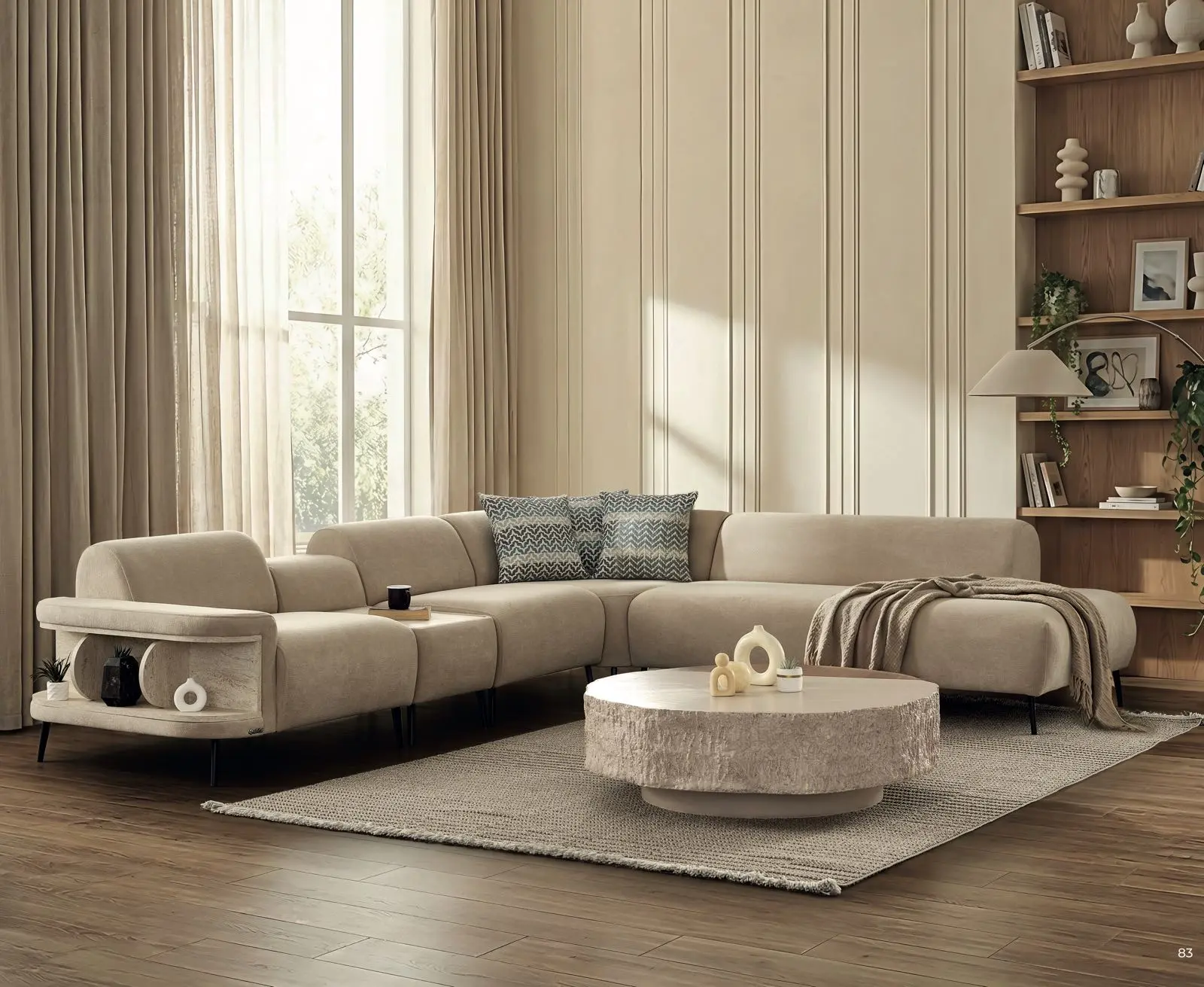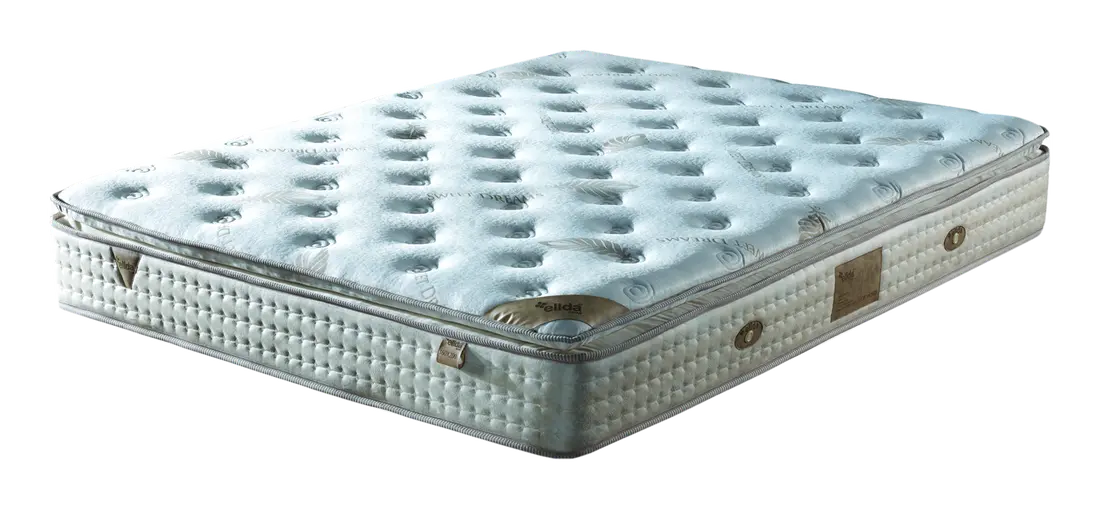
An upholstered furniture label in Canada is a federal fibre content label. Under the Textile Labelling Act and its regulations, the label must show the fibre content of the outer covering as percentages in English and French, plus the identity of the dealer: a CA number, or a company name and mailing address. The old provincial law tags no longer apply.
This guide is written by ellda mobilya, a furniture manufacturer in Kayseri, Türkiye, producing sofa sets, corner sofas, bed base sets and mattresses since 2010. We are not lawyers or customs brokers. We read the official Competition Bureau pages the way a supplier has to, so that a Canadian buyer can say clearly what the label must contain before an order is produced. Last verified: November 2026.
For duty, importer registration and the rest of the Canadian import process, see our guide to importing furniture from Turkey to Canada. This page covers the label only.
Which law governs the label?
The Textile Labelling Act (TLA) and the Textile Labelling and Advertising Regulations (TLAR) set labelling rules for most consumer textiles sold in Canada. The Competition Bureau enforces them. Its guide to stuffed or filled textile articles is the page that applies to sofas, corner sofas, bed bases with fabric covering and mattresses.
The Bureau's rule is simple to state: a dealer must attach a federal label to a stuffed or filled article unless the article is exempt from the TLAR. Upholstered furniture is not exempt. Dealers must also comply with other consumer product safety and consumer protection laws, which the label rules do not replace.
What must the federal label show?
The Bureau states that, at a minimum, a federal label must disclose two things: the fibre content, in percentages, of each relevant part of the article in both English and French, and the dealer identity.
For upholstered furniture and mattresses the Bureau treats these as "excluded articles" for the filling. In practice that means:
- Outer covering and shell: the fibre content must always be disclosed.
- Filling or stuffing: not required on the label for upholstered furniture, mattresses, box-springs and cushions, unless the seller makes a claim about the filling. If a claim is made, the filling's fibre content must be disclosed too, listed separately after the covering.
- Findings: textile parts added for a functional purpose, such as zippers or padding, do not need disclosure unless the seller makes a claim about them.
Fibre content follows the Bureau's fibre rules. A fibre that is 5% or more of the total fibre mass is shown by its generic name and amount. Fibres below 5% may be shown by generic name or as "other fibre". Names are listed in order of prevalence by mass, and abbreviations are not allowed apart from two named exceptions. A tolerance of 5% is generally allowed on blends, and none on single-fibre fabrics.
Who is the "dealer" and what goes on the label?
Every textile label must show either your company name with the mailing address where the business is normally conducted, or a CA Identification Number. A CA number is five digits preceded by the letters CA.
The Bureau lists who may hold one: Canadian manufacturers, processors and finishers of textile fibre products, and Canadians engaged in the business of importing or selling them. A foreign factory is not in that group. If you are not eligible, the label carries a company name and mailing address.
The Bureau also states that the dealer identification and the country of origin, when required, do not have to be bilingual. Which party counts as the dealer for a given shipment is a legal question. Ask the Competition Bureau or your adviser, and tell us the answer so the supplier prints the right identity.
Does the label have to be permanent?
The Bureau separates articles that need a permanent label (one that stays attached and legible through 10 cleanings) from articles that may carry a non-permanent tag, sticker or wrapper label. Check the Bureau's two lists, consumer textile articles requiring permanent labels and those eligible for a non-permanent label, for your exact product.
Two more points from the same page are useful. The label must be legible and accessible to the consumer at the time of purchase. And for custom-made items such as furniture, the fibre content and dealer information may be shown on the invoice, bill of sale or other document, as long as properly labelled samples or swatches are available for the consumer to examine before purchase.
What happened to the provincial law tags?
Canadian retail buyers will remember the provincial tags for upholstered and stuffed articles, with registration numbers on a white label. They are gone. The Competition Bureau records the dates:
| Province | Former rule | Repealed |
|---|---|---|
| Ontario | Upholstered and Stuffed Articles Regulation (O. Reg. 218/01) | 1 July 2019 |
| Manitoba | Bedding and Other Upholstered or Stuffed Articles Regulation | 1 January 2020 |
| Quebec | Act Respecting Stuffing and Upholstered and Stuffed Articles (Chapter M-5) | 9 December 2021 |
The Bureau adds that these repeals do not affect the federal TLA or TLAR. A supplier or importer that still requests a provincial registration tag for a Canadian order is working from an outdated checklist.
Is a change to the upholstered article rules coming?
In August 2020 the Bureau consulted on amendments to the upholstered and stuffed article provisions, including simplifying the rules after the provincial regimes ended. We could not confirm from the sources we checked that these changes have been finalised. The consolidated regulations on Justice Laws were the version we consulted, and a government regulatory listing described the review as ongoing. Treat the current Bureau guide as the rule, and check it again close to your order date.
Label checklist for a Canadian order
| Item to settle before production | Why it matters |
|---|---|
| Dealer identity on the label (CA number, or company name and mailing address) | Required on every textile label |
| Fibre content of each outer covering, by fabric and colour | Percentages must match the fabric actually used |
| English and French fibre wording | Fibre content must be bilingual |
| Any filling or findings claim in your product copy | A claim triggers disclosure of that part |
| Label type and position (permanent or non-permanent) | Depends on the article |
| Mattresses: confirm separate product safety rules with your broker | The textile label does not replace them |
A fabric blend that changes between production batches is the usual cause of a wrong label. Send the label content with the enquiry, not after the order.
How ellda mobilya handles label requests
Our factory in the Kayseri Organized Industrial Zone has a 10,500 m² production area and makes sofa sets, corner sofas, bed base sets and mattresses, so one Canadian order can cover seating and bedding. Fabric and colour are agreed per order, and options depend on quantity and model.
We do not state label capability in advance. Put the Canadian label requirement in your enquiry: the dealer identity, the wording and the label type. What ellda can supply is confirmed in the quote, together with price, minimum quantity, lead time and delivery terms. You can read about our production process, and visits are by appointment. We reply in English, Arabic or Turkish.
Next step
List your models, fabrics and the dealer identity for the label, then send them through our export page. For mattress-specific points, read our guide to the mattress manufacturer in Turkey, and for the wider sourcing steps see importing furniture from Turkey.